Great teams don't happen by accident.
They need the right hiring philosophy, infrastructure and culture to flourish and grow.
At BigCommerce, I grew Product Design from our first two hires in San Francisco into a distributed design, research, and content organization spanning the U.S., APAC, and EMEA. Through attrition, global disruption, the pandemic, and RIFs, I focused on building stability, protecting culture, and creating growth opportunities for strong performers.
Along the way, I helped establish key capabilities for scale, including our first UX writer, a dedicated UX Research practice, and a Platform Design team.
I fostered a team culture rooted in curiosity, storytelling, collaboration, and craft—while keeping us focused on delivering thoughtful, high-quality experiences across 20+ domains, from catalog and pricing to storefronts, developer experience, mobile, checkout, and post-order journeys.
Hiring & coaching
My hiring approach
Of all the things I accomplished at BigCommerce, the team I built and the people I hired were the most consequential. Everything we were able to achieve, from product improvements to cultural impact and strategic influence, started with having the right people.
I partnered closely with our recruiter to develop a thoughtful, repeatable hiring loop that was efficient but also deeply reflective of our values. I was deliberate in how I structured the process and in who I brought onto the interview team.
We needed people who were excited to tackle complex challenges, with a tolerance for ambiguity. I focused on hiring product thinkers who had strong craft or methodology. I didn’t want just executors, I wanted thought partners who could shape a point of view and influence product direction.
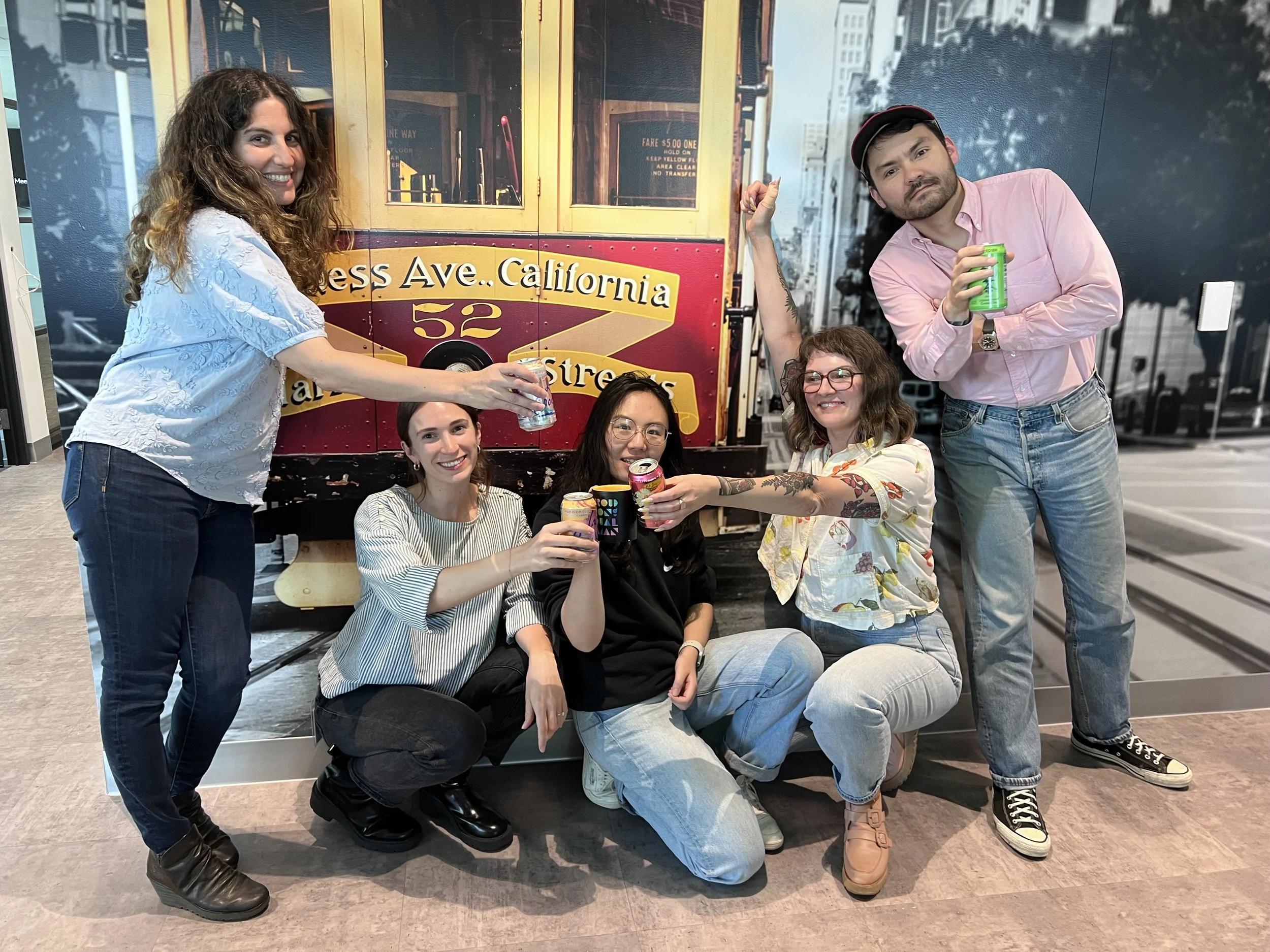
"We really had such a strong group of designers and a great design culture. [I had]... space and ownership… to explore and grow during that time, and I appreciate that."
Former Senior Product Designer on Dassi’s team
Career pathways
Building the infrastructure
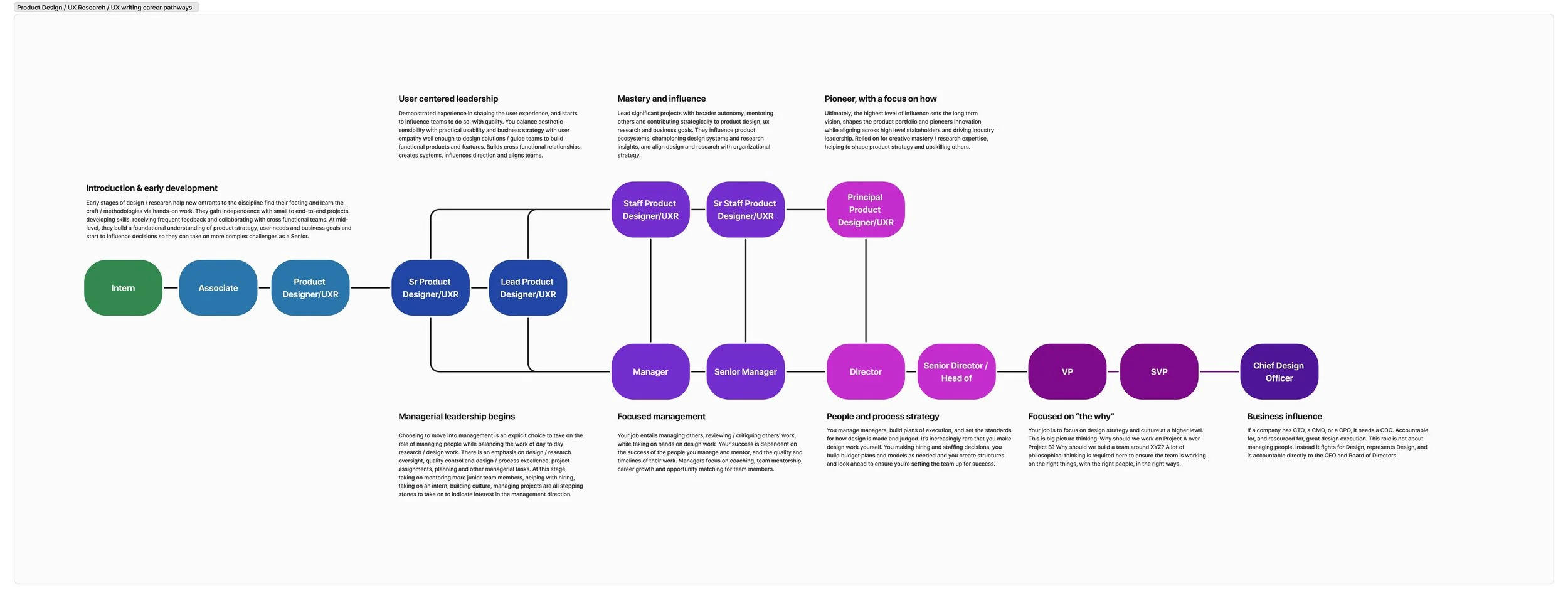
I want people to have flexibility in their growth while knowing what’s expected of them.
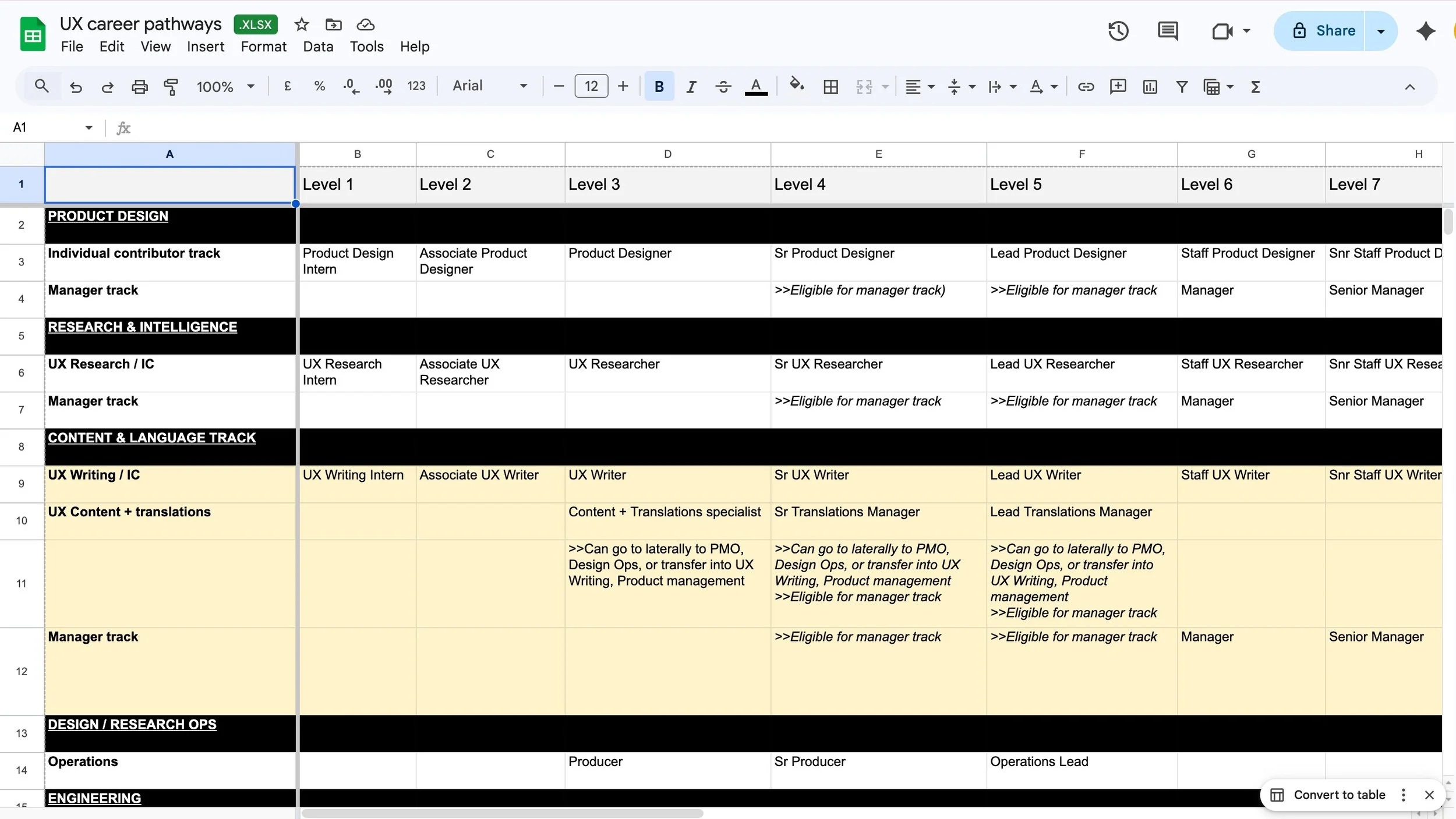
They should be able to move across roles a jungle gym fashion, grabbing onto exciting opportunities that allow them growth, rather than just mindlessly climb a ladder. As most of the team reached Senior level and started asking what came next, I worked with my two manager reports in FigJam to solidify expectations of what Lead/Staff Designer meant — so that performance and promotion conversations were grounded in shared definitions.
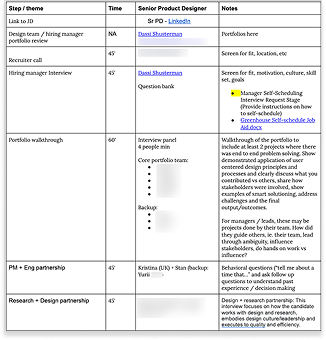
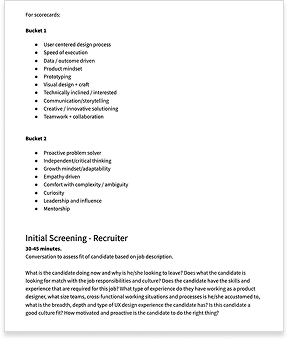
Bucket 1 and Bucket 2 refer to culture and hard skill fit. For each role I created an interview loop with a rubric and a question bank.
Accomplishments
Hired the org's first UX writer — built the case, wrote the JD, designed whiteboard challenges
Introduced inspiration segments and Product Design showcases
Interview loops and career pathways built for IC, Manager, UX Research, and UX Writing tracks
$400/person budget secured for learning and conferences
Created business case and spearheaded product design summits
Promoted 60% of the team during my time at BigCommerce
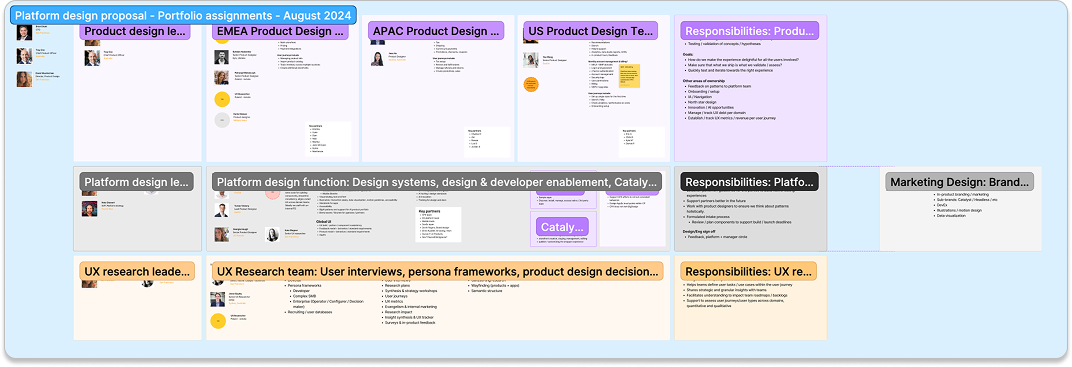
Having clarity on who was working on what was always important - I used a diagram to visualize what everyone was working on and responsible for, and updated it as the team changed over time.
Culture & team
Coaching is a daily practice: I've consistently pushed managers, designers, writers and researchers toward work that stretches them, helped team members develop storytelling and be more proactive partners to engineering, and positioned research to be more influential and strategic.
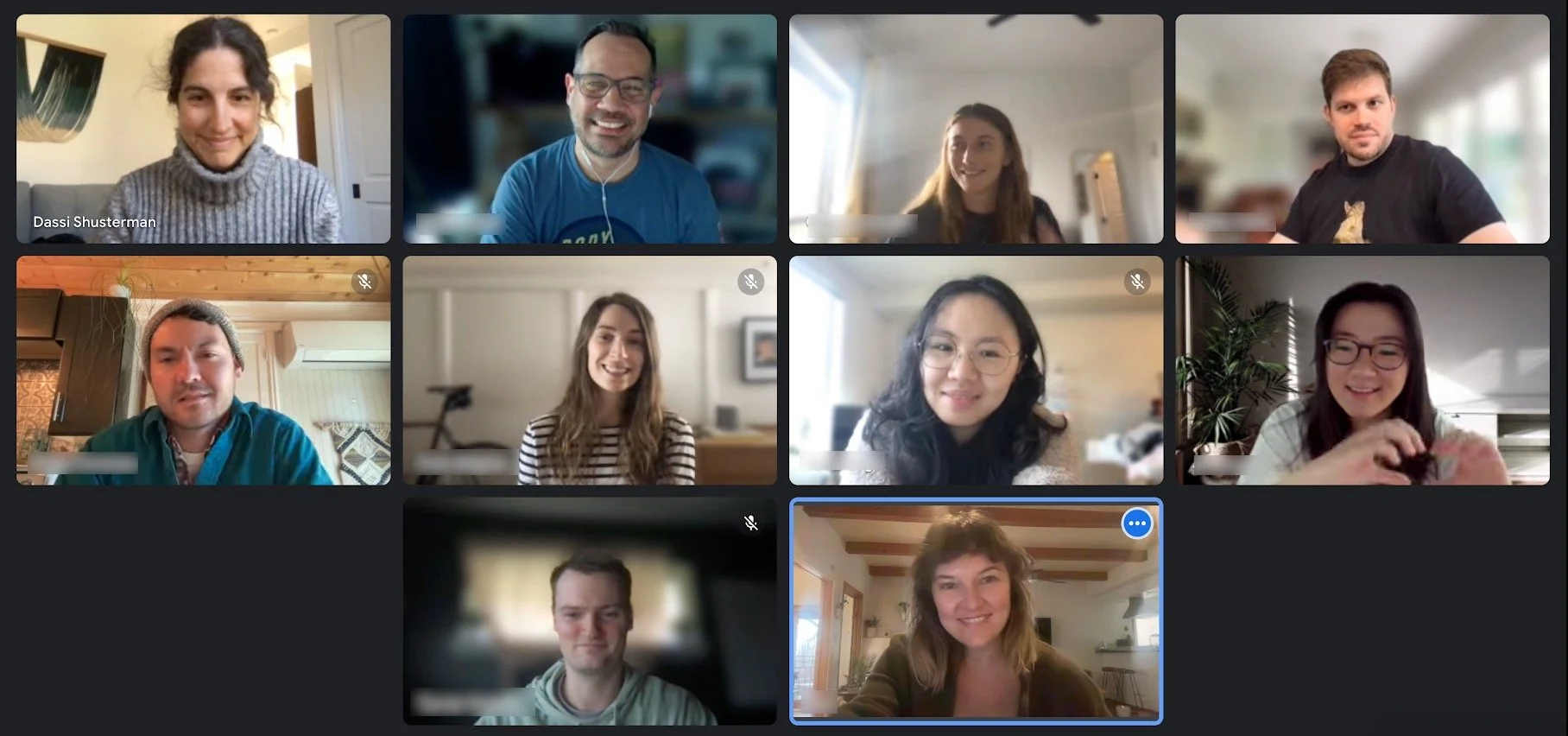
Since the team was spread across so many geo locales, we could never all be in the same room at the same time. We ran design feedback sessions 3x a week so everyone had overlap with everyone else.
The culture I shaped revolves around quality of work and collaborative authenticity. I create room for sharing our inspiration and fears and make space for creativity, hard work and fun.