
How I drove a design offsite to create a design vision & inform the future of our enterprise product
Ran hybrid design offsite with 15 designers / four teams, defined a North Star vision aligned to enterprise product strategy, AI investment opportunities, and long-term product direction.

An opportunity for design leadership
Situation & context
As BigCommerce shifted upmarket to enterprise, the product strategy was evolving faster than design’s shared point of view.
Design risked being pulled into execution after Product and Engineering had already placed their bets—limiting our ability to influence direction at a strategic level.
This was an important moment for design to identify a vision.
To ensure design could shape (not just support) the company’s four strategic “Big Rock” pillars, I initiated and led a cross-team offsite to establish a clear, business-aligned North Star vision.
The goal was to create shared clarity across teams, align design direction to company priorities, and enable faster, more confident decision-making over the next 2–5 years.
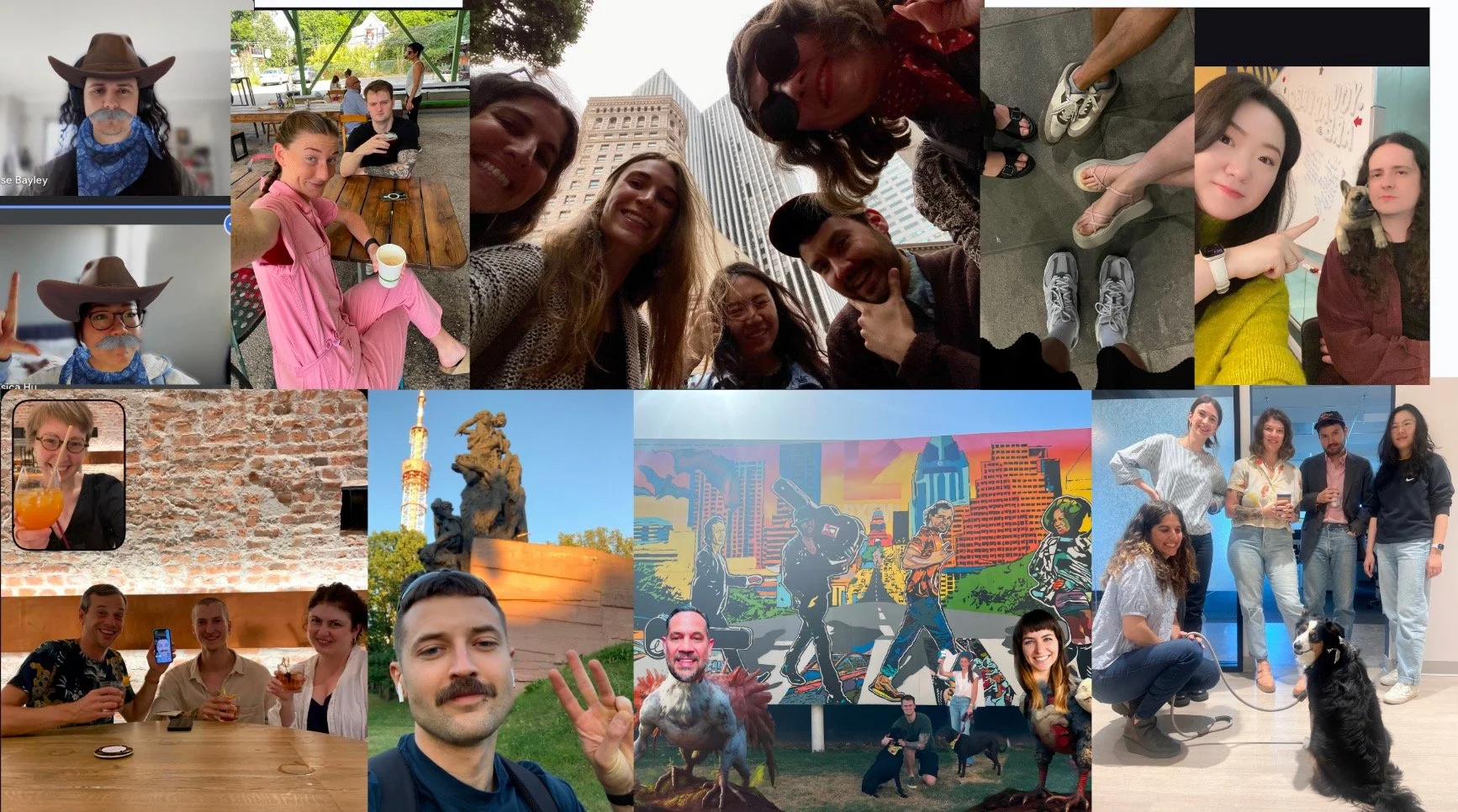

Taking on the role of strategic leader, I…
Identified a strategic gap in how design was influencing enterprise product direction; proposed a dedicated design offsite to leadership.
Defined the vision, success criteria, and scope for three-day, research-informed offsite focused on long-term (2–5 year) impact rather than near-term execution.
Guided pre-work across four product pillars, and set the bar for holistic, journey-based visions grounded in customer needs and business priorities.
Built in exercises to ensure each team considered AI-forward concepts as part of the platform evolution.
Socialized outcomes with Product + Engineering leaders and presented proposals at the P&E planning offsite to shape roadmap conversations.

Product design offsite goals
Step back from incremental delivery to reimagine the next gen merchant and developer experience, address the evolving needs of an increasingly enterprise-grade set of use cases.
Create North Star visions (2–5 years) rooted in real journeys and current gaps.
Generate energy + shared clarity: build excitement around where the platform should go and spread ideas across the org.
Precursor to the P&E Summit: produce strategy-ready outputs to share, pressure-test, and evolve with Product + Engineering.
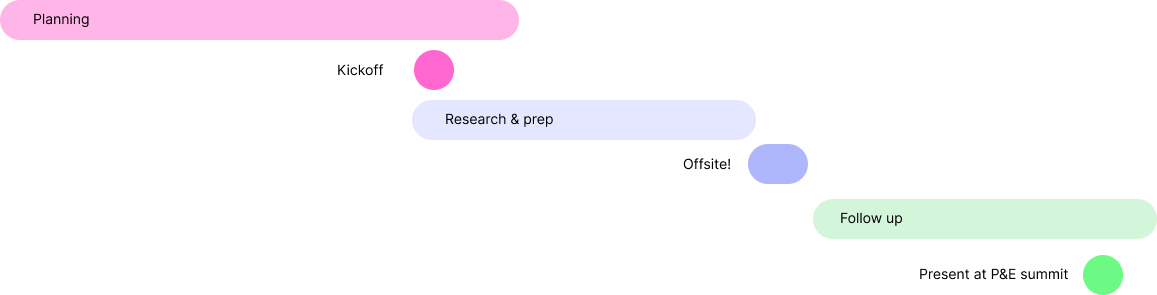
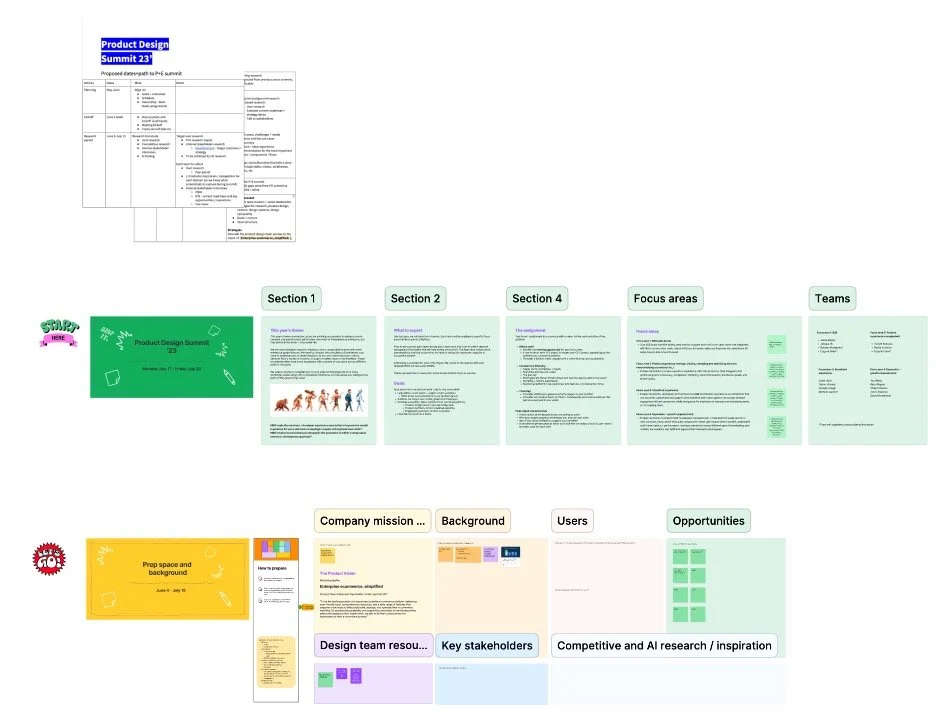
Structured pre-work over prior weeks so teams started with context, inputs, and known gaps—not a blank page.
How might we make the merchant and developer experience dramatically better as workflows become more complex?
Offsite prep materials
North star outputs
Across four teams working across zones in hybrid sessions, we produced a set of North Star artifacts designed to influence and inspire roadmap decisions. Each group delivered an E2E journey-based vision, key concepts, and concrete artifacts that could be evaluated, sequenced, and carried into Product + Engineering planning.
The theme was Evolution.

Team 1: HMW enable creation of composable storefronts in the future?
Challenge
Internal teams didn’t understand what Catalyst (the new open-source, headless commerce framework for building storefronts with React + Next.js) actually was; it needed more definition.
Offsite outputs
Insights: Catalyst adoption depended on an ecosystem (Control Panel + Dev Center + docs + GTM), not storefront UI alone.
Concepts: Enterprise agency journey service map; wireframes and ideas to make storefront options—especially Catalyst—much clearer and easier to choose, compare, and implement for developers and marketers.
After
Improved clarity and understanding around how to define Catalyst and the choices users need to make when selecting a storefront.
Seeded ideas into features that launched, including developer center, Catalyst landing supplementary content and one-click Catalyst storefront setup with integration into our visual editor, Makeswift.
Success
Features used and adopted by some of our largest customers including Uplift desk, One King’s Lane, King Arthur Baking Company and Mountain Warehouse.
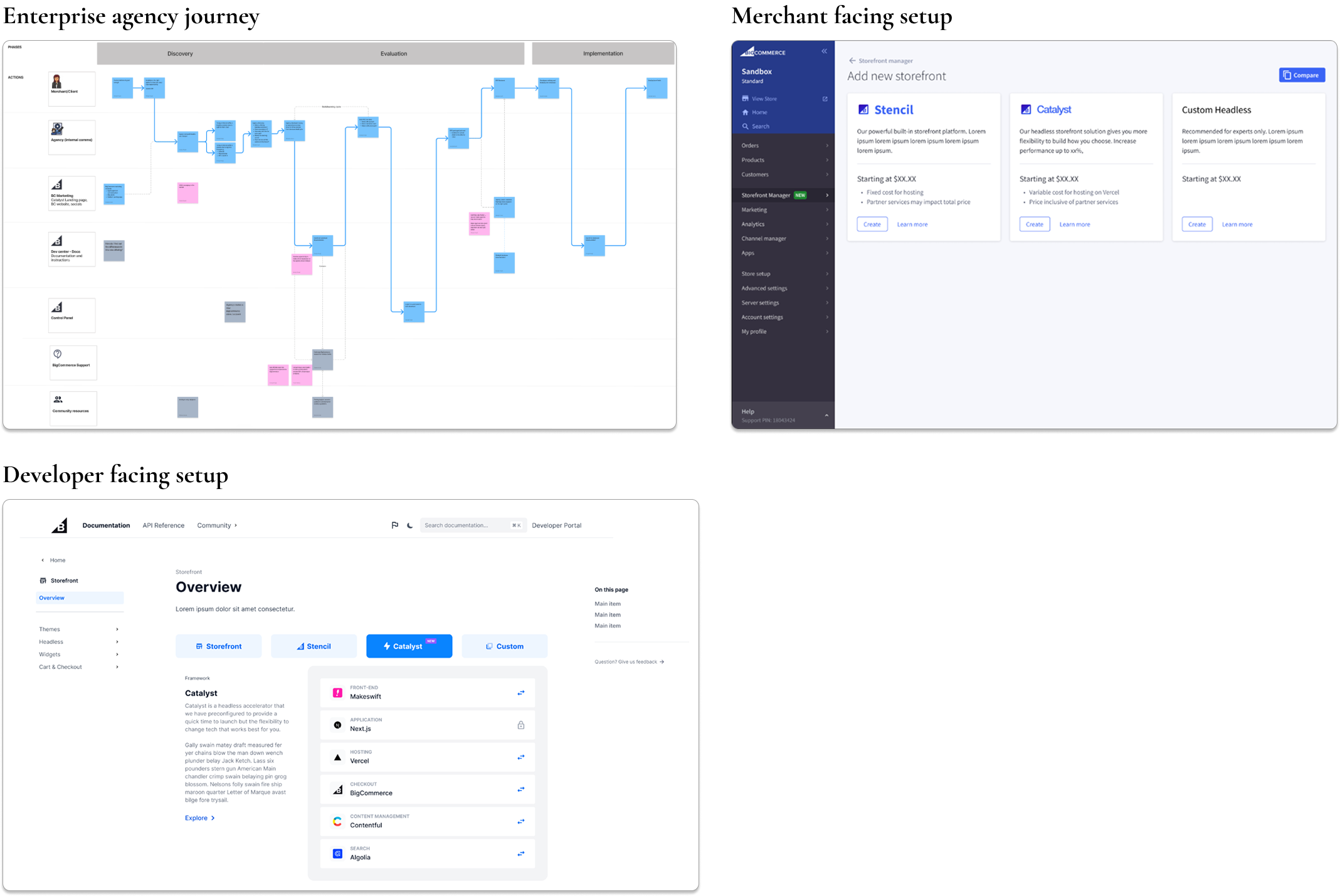
Artifacts from offsite
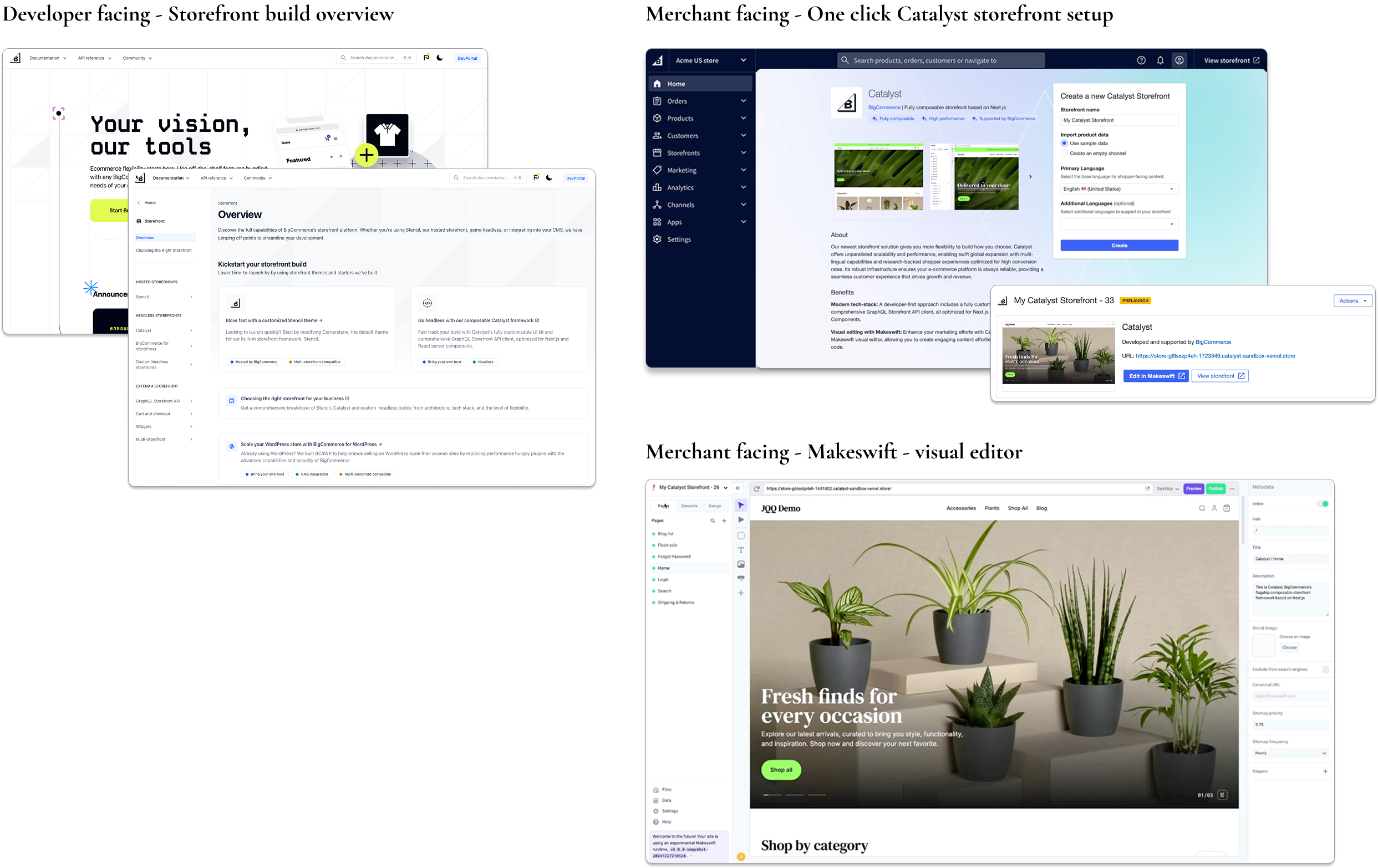
Shipped products informed by offsite
Team 2: HMW enable sales people with the right B2B tools?
Challenge
B2B sales reps had just a single menu item in a generic admin, with no dedicated workspace. They manually interpreted buyer emails or requests, looked up products and pricing themselves, built quotes line by line, and wrote every message from scratch.
Offsite outputs
Concepts for an AI-powered, dedicated sales portal for B2B reps, including message-optimization and AI-generated quotes from storefront activity & buyer emails, plus tools to optimize quotes and streamline how reps work.
After
Launched features to streamline B2B quoting, including AI-generated quote proposal emails, a CPQ (configure-price-quote) system for sales teams to build complex quotes, add buyer-specific discounts, and calculate real-time shipping and tax.
Success
BigCommerce won deals, customers saw increased revenue and won medals in the B2B space, largely due to B2B features it released, included these which design helped to shape.
Artifacts from offsite
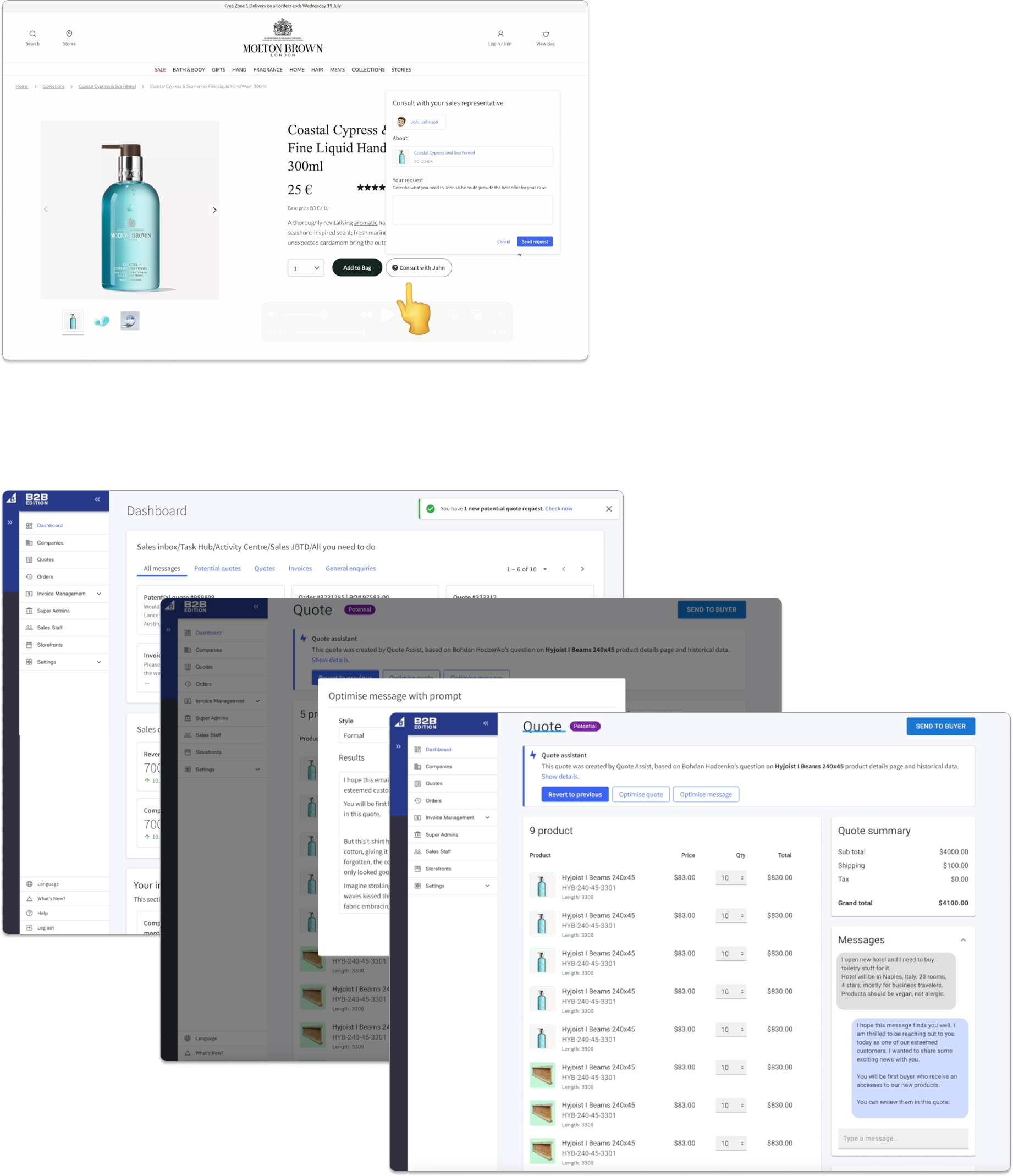
Team 3: HMW envision a flexible product catalog?
Challenge
BigCommerce’s product-centric catalog was needing to evolve in order to support how enterprise merchants managed complex variant-driven catalogs.
Offsite outputs
Insights: unlocking true enterprise value requires shifting to a flexible, attribute-driven, variant-centric catalog mirroring real-world catalog management.
Concepts: Attribute‑driven, variant‑centric catalog, simplified product creation flow, first‑class support for kits, AI‑assisted merchandising and landing pages so merchants can fully model and promote complex product lines.
After
We launched BigAI copywriter, an AI-powered product description generator, inspired by this work.
Although forward thinking and customer-centric, most of these concepts were not added to the roadmap, due to competing priorities of migrating from v2 to v3 Catalog and bug-fixing. Design did contribute to improvements to support other needs associated with the migration, image manager, pinned sections and other features.
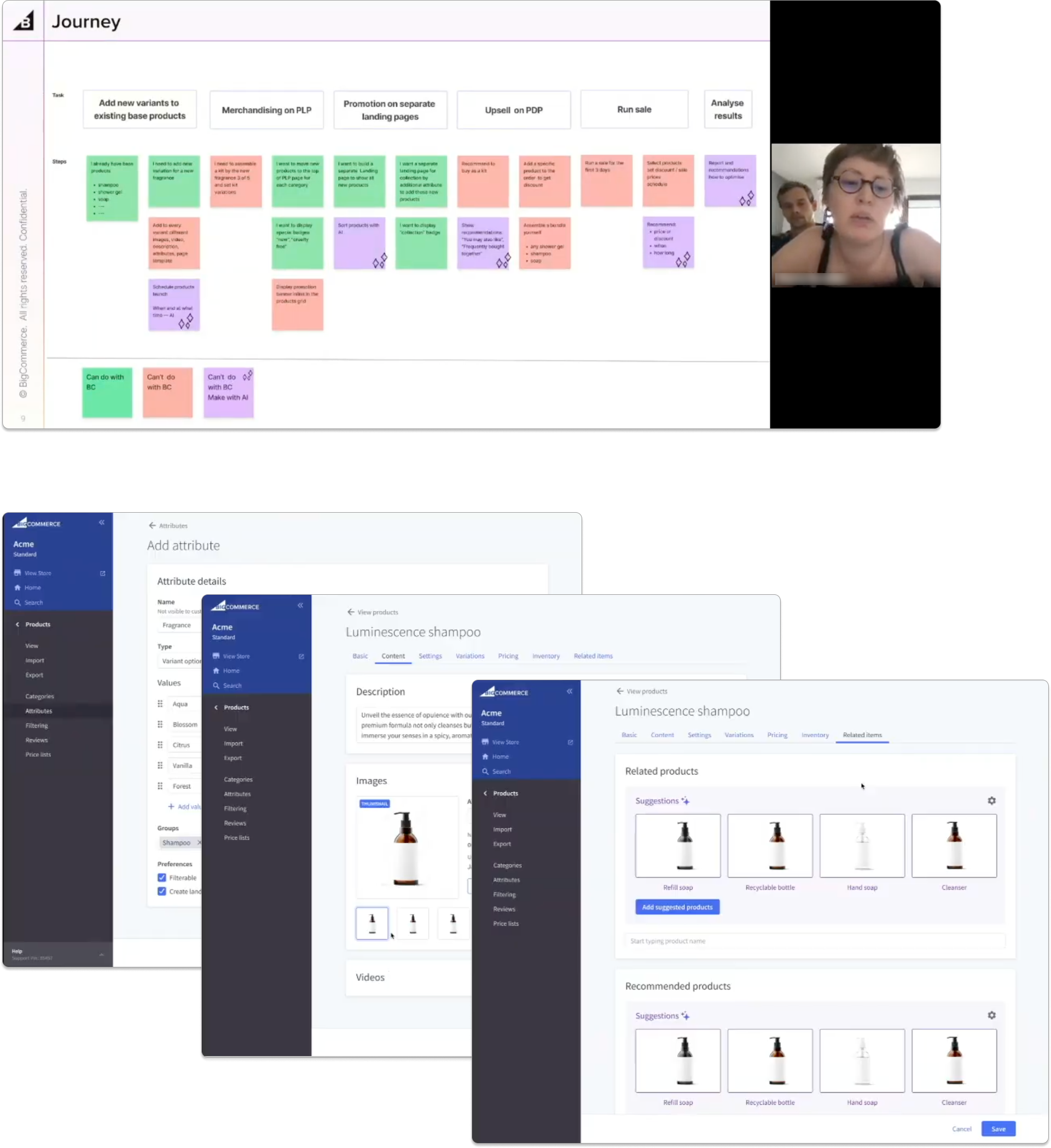
Artifacts from offsite
Team 4: HMW help enterprise merchants expand into new regions?
Challenge
Enterprise merchants who want to expand internationally experience slow, confusing, high‑risk set up tasks.
Offsite outputs
I was part of this team - we envisioned a scalable, differentiated, AI-powered way to help merchants enter new markets with confidence and optimize data during setup.
Concepts included AI‑driven discovery and recommendations, a storefront manager with demo storefronts and readiness scores, and a guided setup UI tailored to different roles (merchandising, pricing, operations).
Smart tools to reduce setup friction and increase confidence: a smart translator for consistent catalog localization, pricing tools that auto‑convert and localize prices, and consolidated multi‑store analytics and optimization prompts to help merchants understand performance across regions.
After
Launched features shaped by these concepts included localization settings, global/local inheritance per field behaviors and override behaviors for data including product images and parts of the experience including cart, checkout, transactional emails and order statuses, for building region-specific experiences.
We also launched BigAI copywriter, an AI-powered product description generator allowed merchants to optimize their SEO across languages.
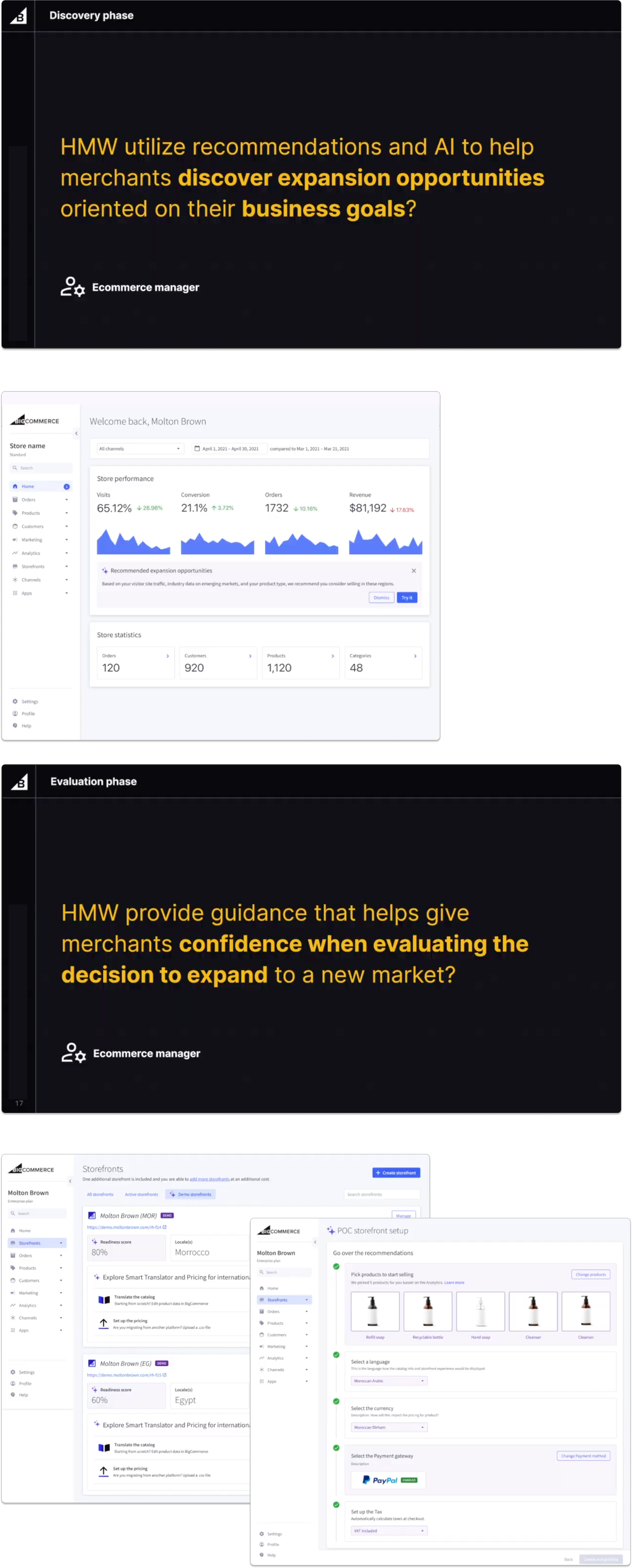
Reflection

What could be better?The hardest part of this work wasn’t creating alignment in the room — it was turning that alignment into real roadmap change afterward. While the North Star resonated, I underestimated how much one-on-one follow-through was needed to move the needle.
Setting vision is only the first step; concrete change requires sustained partnership, continuous, sometimes uncomfortable, tradeoff conversations and ongoing reinforcement to ensure strategic direction actually shapes execution.